
CUSPS
Twixt and twain

It’s a melancholy time in the garden, this time twixt summer and fall. The anise hyssop, which bloomed prolifically, is fading, the bees trolling the spent, dusty blooms. Yet, on the other side of the garden, the hops are busting out. Saint John’s Wort happily cohabitated with my strawberries, and both plants enjoyed being companions with benefits. Passionflower pulls down the top of my fence with her heavy, lush foliage. Much tea and tincture to be made with her. I no longer harvest tulsi—I have sufficient dried flowers and leaves to get me through winter—so I let the pollinators have their way with her. Cosmos drops her spindly seeds to the earth, if the finches don’t eat them first.
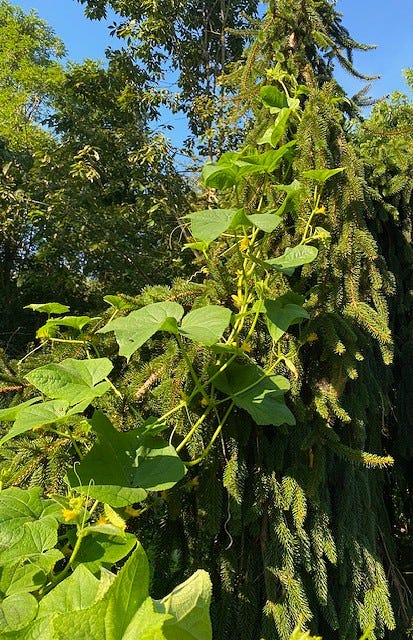
This morning, I pulled down my cucumber to make way for fall lettuce, turnips, and cabbage. Yes, pulled down, for the wet spring ignited passion in this $3 potted vegetable and she climbed to the top of my tortuosa pine.
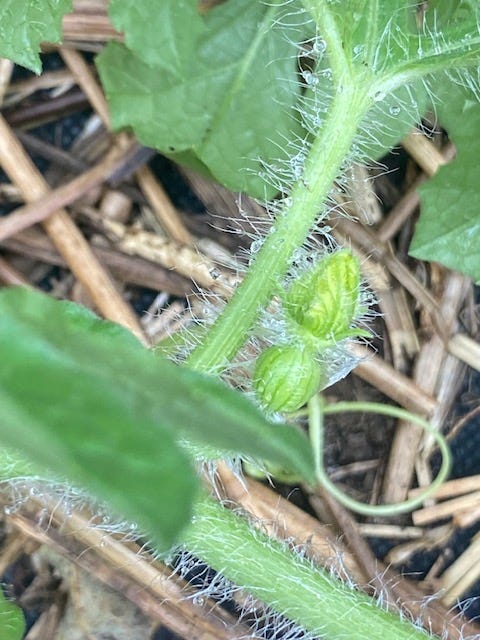
I’m glad for the harvest pace to slow. Yet sad, too. Bittersweet, I guess—there is an ephemerality about Spring awakenings that Autumn does not match. Though, as I walk through the rows, there is plenty yet to come: okra setting buds, green beans and limas trellising up the fence, the frilly tops of carrots poking through the earth. The sweet potatoes vines trailing over their bed (the greens are delicious sauteed with garlic). And, tomatoes. Mine started late this year, but I should be eating and canning heaps of them in the next few weeks. My late baby watermelons are flowering, and several have tiny little melons at the flower base. I wait impatiently for the calyces to set on my roselle hibiscus.
In four months, I retire. I’ve been in academia, as a student, researcher, or professor, since kindergarten. Other than internships and clinical rotations, I’ve never not been in a classroom, either behind the desk or in front. As a result, all that schooling has formed me into someone who relies heavily on the left side of my brain. Until recently, intuition eluded me, replaced by analytical logic that often left me paralyzed when it came to making decisions (big decisions mostly, but it can take me five minutes to choose a basket of berries). Also until recently, I believed in facts, especially those rooted in science, and counted on these truths to guide my decisions. In the wake of COVID times, those truths started to shatter, slowly at first, but then explosively, like a melon on a post shot at with a semi-automatic, or a porcelain bowl flung at a wall.
Which left me bereft. Intellectually, mentally, and spiritually. Beyond gin and tonics, what brought solace was engagement with the natural world. Which was a bit difficult living in the heart of Baltimore. Hence, the move to my four acres in West Virginia.
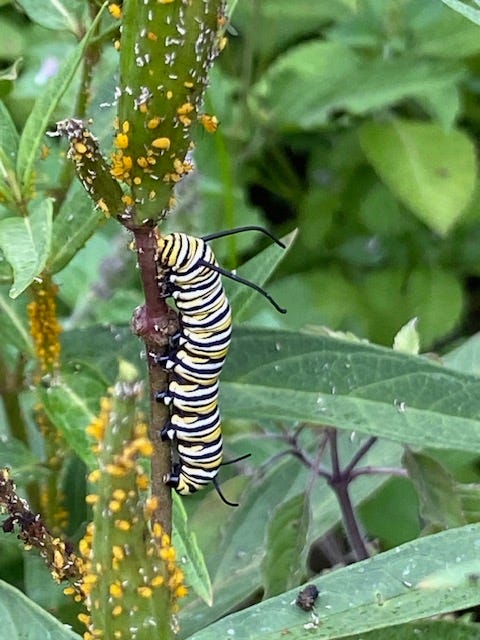
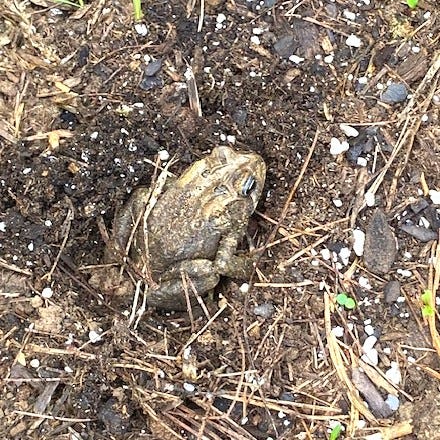
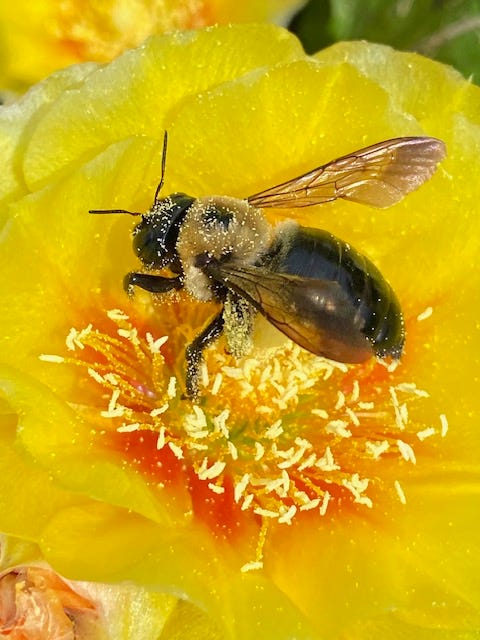
The last three years have healed. I am slowly disengaging from my left hemisphere and trusting in the right. Trusting my heart and gut and soul to whisper directions for decision-making. Which was extremely difficult—I’d become estranged from feeling anything other than the strong, and often ‘negative’, emotions of anxiety, fear, and anger. When overwhelmed, I seek out the small miracles of the natural world—the monarch butterfly munching her way through milkweed, the bee swollen with pollen, the frog burrowing in the damp furrow of my beet row.
Surrendering to the land, to the energy that surges from the earth through the soles of my bare feet, to the small observations that crack my heart open, has allowed me to experience peace, love, and, at times, unfathomable joy.
I have come to realize the one universal truth to living: you always have a choice—fear or love. How you choose dictates how you live. For much of my academic life, my left brain defaulted to fear. Now, my right brain whispers: love. Choose love.
I still seek balance as I walk this tightrope, in trying to figure out how much to ‘know’ and ‘understand’ versus how much to feel and intuit. But increasingly, I find myself not giving an emotional damn about much of anything outside of my fence line, of anything outside of my control. For the most part, I observe the world and it’s ‘news’ with dispassion, interested in the facts of the events (as they are defined for us) but not giving into the fear and shock and awe—and hopelessness—I once capitulated to. Of course, it remains vital to remain informed—living with one’s head in the sand is dangerous these days—but now my research includes critical thinking and critical feeling. I listen to the physicality of my bodily responses, as well as to the energy that pulses around thoughts and feelings and ‘facts’ as they are revealed.
Every day, I lean more into my right brain, once a stranger, now a friend.
Peace…