
The Feels
Reflections on endings... and beginnings...

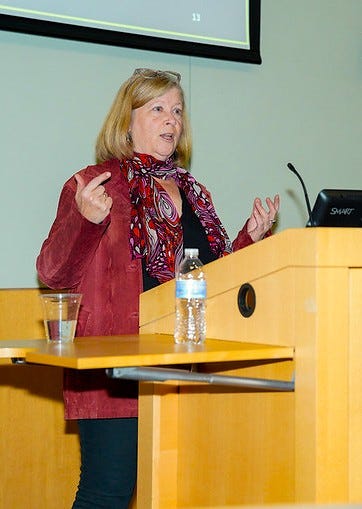
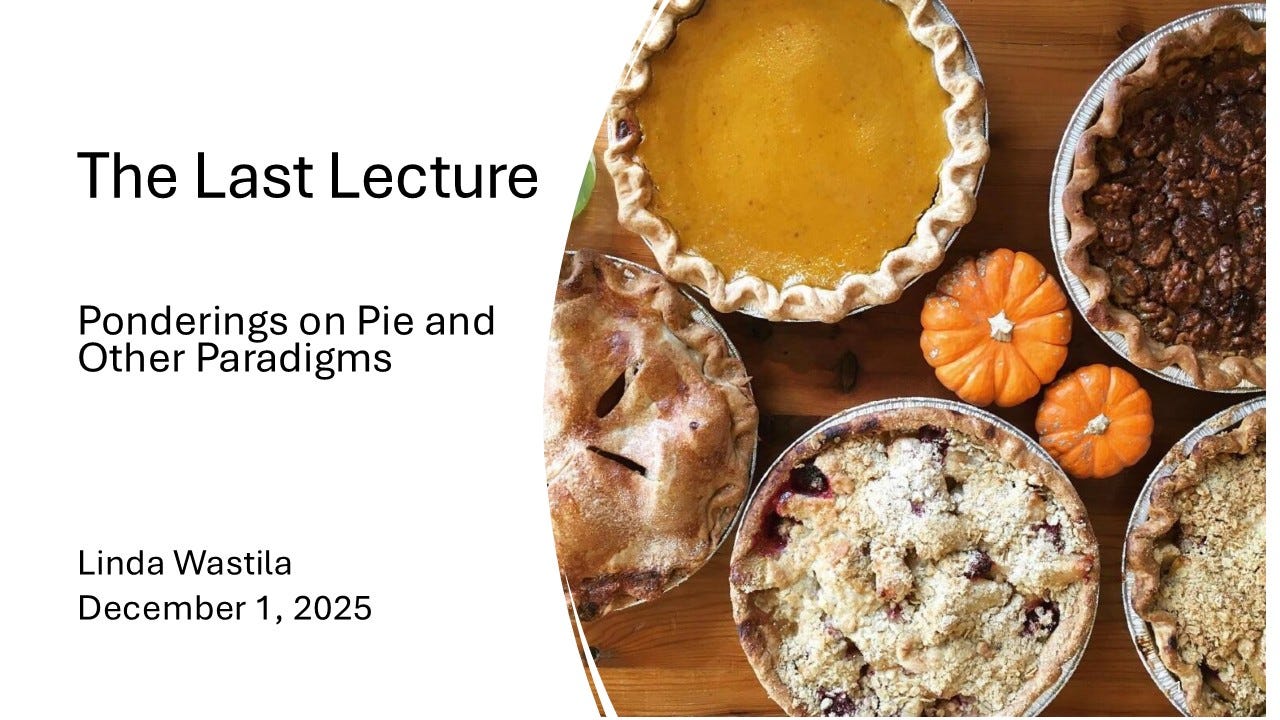
Last week was an emotional doozy. I’m still tender—and exhausted—from it all, still threading my way through the whirlwind of feelings. The week kicked off on Monday, when I formalized my separation from the University of Maryland School of Pharmacy, where I’ve spent 24 years mentoring, researching, teaching, learning. This past year was spent in a terminal sabbatical, which gave me the chance to tidy up research and teaching and students and, most of all, allowed much-needed distance and space. And a less jagged transition to the uncertainty of post-retirement. When my Chair asked how I wanted to celebrate, I suggested a last lecture, a first at my institution. I’ve been writing this lecture in my head for over two years, and those first drafts were vitriolic and fiery. But time and nature soften hard feelings; while the tone of my lecture has shifted considerably, the message remains the same. The transcript follows.
Last week also marked the death of my father 16 years ago. His absence still feels recent and raw. My dad was one of the few in my life who ‘got me’, even though I didn’t figure that out until I was in my forties.
And one of my children required a surgical procedure. The child is fine, recovering from the pain and physical trauma surgeries provoke, but the anticipation and worry, of course, tightened my heart like a vise.
Still reflecting. Still feeling. Still healing. A chapter closed. There is a bittersweetness to this week, especially the retirement. Yet I would not change anything—every path leads to another, and another, and another. And that is the blessing and grace of life. Peace…
Thank you for being here today. I am grateful for each of you who chose to spend your lunch hour listening to me reminisce about my 24+ years here at the University of Maryland Baltimore School of Pharmacy—though I suspect you also came for the free reception food. Hopefully, I will impart a few words of wisdom. I promise to get you out well before 1pm and, please, no need to take notes—there will be no quiz.
But first a caveat: There may be discomfort in some of my remarks. My thinking and experiences are my story, which is not your story, and neither my story or your story are right or wrong, better or worse—they are just our stories. But my story relates directly to why I am here, now, speaking to you about my retirement from being a professor, a job I hold dear and which occupied the greater part of my life.
Several folks have asked me why I am retiring. After all, they say, you are young. And given that most academicians retire well after the ripe old age of 63—which is how old I am—it’s a good question, one I’d like to address before getting into the meat—or the pie—of today’s talk.
So, why retire now? Why not? Isn’t our world amazing? There is so much to see and do and experience and feel. It’s so exciting! To fully engage with life requires physical and mental capacities which I now, thankfully, still possess. And, as a lifelong learner, I remain curious about many things—writing, herbal medicine, gardening, nature, metal-working—passions I cannot fully explore while tethered to a demanding, full-time job, which is the case for most SOP faculty. I want to engage with these other interests before it’s too late for me. I don’t want the fate of my parents, who worked hard and retired too late to explore their after-work lives.
And, I’m a mom! Not only do I love my kids—I like them. Both are adulting, are working demanding yet satisfying jobs, and, best of all, have wonderful partners. So of course, I want to spend more time with my kids and their partners, their cats and rabbits, and be a greater part of their lives.
Of course, there are other reasons for my early retirement, which I will get into. First, some context: When I first arrived here in October 2001, I was hired as a research associate professor—an opportunistic hire who could provide research capacity to the then-budding health services research program without financial risk to the school. Then, I was responsible for bringing in my salary and the entire budget of studies I proposed to conduct. For years, I received no coverage from the school because I was not on a tenure or clinical track. It was a daunting task to be a research professor, to be entirely self-sufficient for a paycheck and benefits.
At that time, we were not our own department; indeed, the handful of us who did health outcomes research were folded into the Pharmacy Practice department. Just as we are now. A year later, when we finally became the PHSR department, my then boss Daniel Mullins asked: Why did you decide to join the School? I answered: To have fun. He then asked: How long do you think you’ll stay? And I said: When I stop having fun.
And I did have fun. Two decades of fun conducting fulfilling studies and mentoring incredible students, of building research teams and growing knowledge.
Until March 2020. Like many of you, I stopped having fun. The pandemic locked us out of our offices, away from our students and colleagues. It was not fun to deliver lectures to 140 pharmacy students from home using a laptop with crappy wi-fi. It was not fun to manage four grants, including a newly awarded NIA grant with multiple moving pieces, via zoom. It was not fun working remotely with my four graduate students on their dissertation. Work became a stressful, soul-sucking endeavor.
Yes, the pandemic ended. Somehow, most of us survived almost two years of work and life turmoil and trauma, even those of us who, like myself, declined the vaccination invitation—and paid a tremendous personal and professional toll because of that decision. Our forced isolation provided plenty of time for wallowing, introspection, and reflection. Indeed, for me, it triggered an existential crisis.
When at last we returned to our offices and ‘normalcy’, I tried to revive my pre-COVID productivity, energy, and enthusiasm. But other events, including the sudden and still unexplained dissolution of our small department and the devolvement of formerly collegial relationships due to intellectual appropriation, further fueled my demoralized state. The joie de vivre I once felt about my professions, my work, my purpose, evaporated. And it did not return.
I am a firm believer in not holding on to people, situations, or energy which no longer serve me. For if they no longer serve me, how can I possibly present my best self to serve others? It was this recognition that I was not my best self in my position that led to my decision to retire. Please note—I am not bitter or sad or resentful or angry about this decision. Indeed, I leave knowing I have given my best self under the circumstances, and it is on this higher note that I want to be remembered.
***
So, what is a last lecture? The term originated from Dr. Randy Pausch, a computer science professor Carnegie Mellon who, in 2007, delivered a lecture about his childhood dreams and how he achieved them. He intended for his lecture—and book—to impart to his children and students what he believed is important in life. The following year, he died from pancreatic cancer.
Like Randy Pausch, my intended audience today is primarily my students, especially my doctoral students. But I hope it is also a universal lecture—we’ve all been students at one time or another and, hopefully, we all still love to learn. We all have dreams we wish to realize. I know I do. So here we go—My Last Lecture:
***
Legacy – Latin – legare – to bequeath; to appoint by a last will. What is legacy? We usually consider legacy when someone dies. Despite spending the last year in something called a terminal sabbatical, I assure you—I am not kicking the bucket. Yet.
But retirement is an ending, for me a huge ending, almost a mini-death, and it has forced me to consider my impact. Impact in and on my professions of pharmacy and public health, the school, students, family, the state of science. Society writ large. In our society, impacts tend to get quantified. As a faculty member, my impacts are assessed during those annual fun-filled exercises called effort reports. Effort reports rely on all kinds of widgets to assess impact: hours lecturing, hours in service, number of students, number of graduated doctoral students, and, last but by no means least: number of publications, number of grants and contracts, and dollars of grants and contracts.
I’d like to think my legacy is less in these quantifiable components of productivity and more in my words and actions.
***
My training is in health policy. I’m fortunate my training aligns with my scholarly passion—to examine how policy impacts individual and population health in intended and unintended ways. I’ve always been most curious about the unintended consequences. As a health policy geek, I rely on paradigms and frameworks to make sense of policy implications. For the past 16 years, every student who has taken my PHSR 610 class has seen this model:
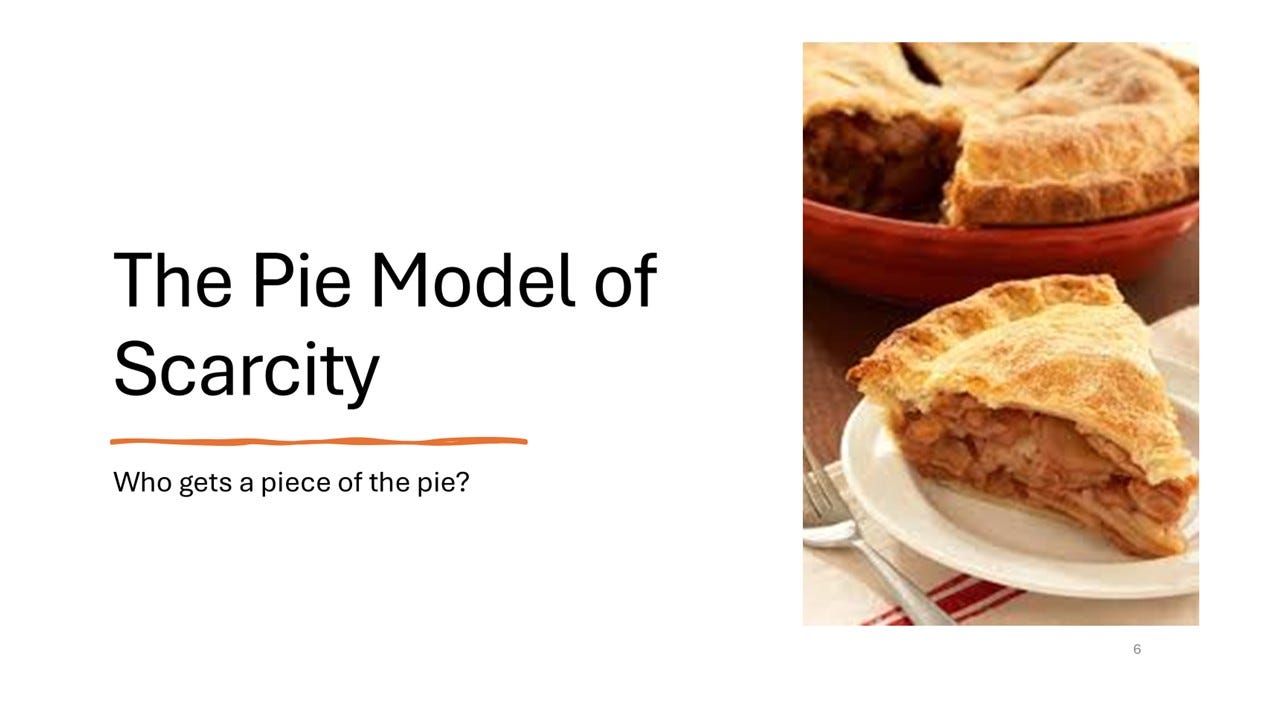
This is how the world views life. Gotta get a piece of the pie. The biggest piece. From the best pie (because these days it’s not just quantity but quality). And this is how health policy works—consideration of a resource: who gets what when and why they get what they get and what happens if some get too much or not enough. Who even gets to the buffet where the pie is displayed.
Students, I confess—I’ve made a mistake about this pie. I’ve been teaching this pie thing the wrong way. Yes, it may pertain to the dominant narrative of policy—of life—but IF you value being the best researcher and teacher and overall human being you can be, you will see it requires modification. I will get to this, but for now, hold on to this thought—the scarcity pie is wrong!
How have I come to conclude the pie model is no longer valid? During my pandemic-induced existential crisis, I spent considerable time thinking about purpose. About the meaning of life. At least my purpose and life. And a large part of my thinking was about another framework I frequently invoke, one I call THE THREE C’s of MENTORING model: Curiosity, Critical Thinking, and Communication.
I share The THREE Cs with every student who works closely with me on research projects and/or their dissertations. To me, it is the paradigm of what it takes to be a successful scholar in the field of pharmaceutical health services research.
Like all decent policy scholars, I learn and apply and modify models. In recent years, I have tweaked these two frameworks considerably. Today I will discuss these changes, using myself as an example because I only know myself and, well, hey, today is all about me.
Let’s start with the THREE Cs’, which I have expanded:
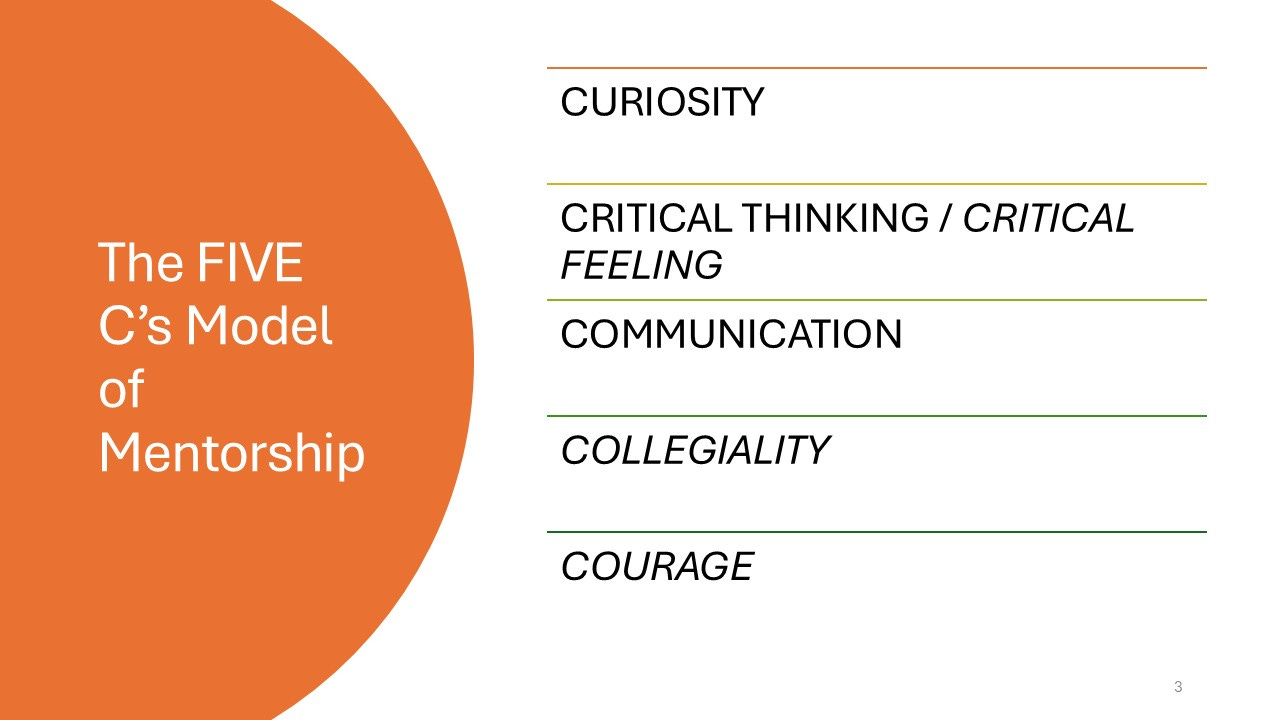
Voila! The Five Cs: Curiosity, Critical Thinking (which itself has been tweaked), Communication, COLLEGIALITY, and COURAGE. IMHO, these are the five traits necessary to become a leading scholar. Let’s discuss each of these in turn.
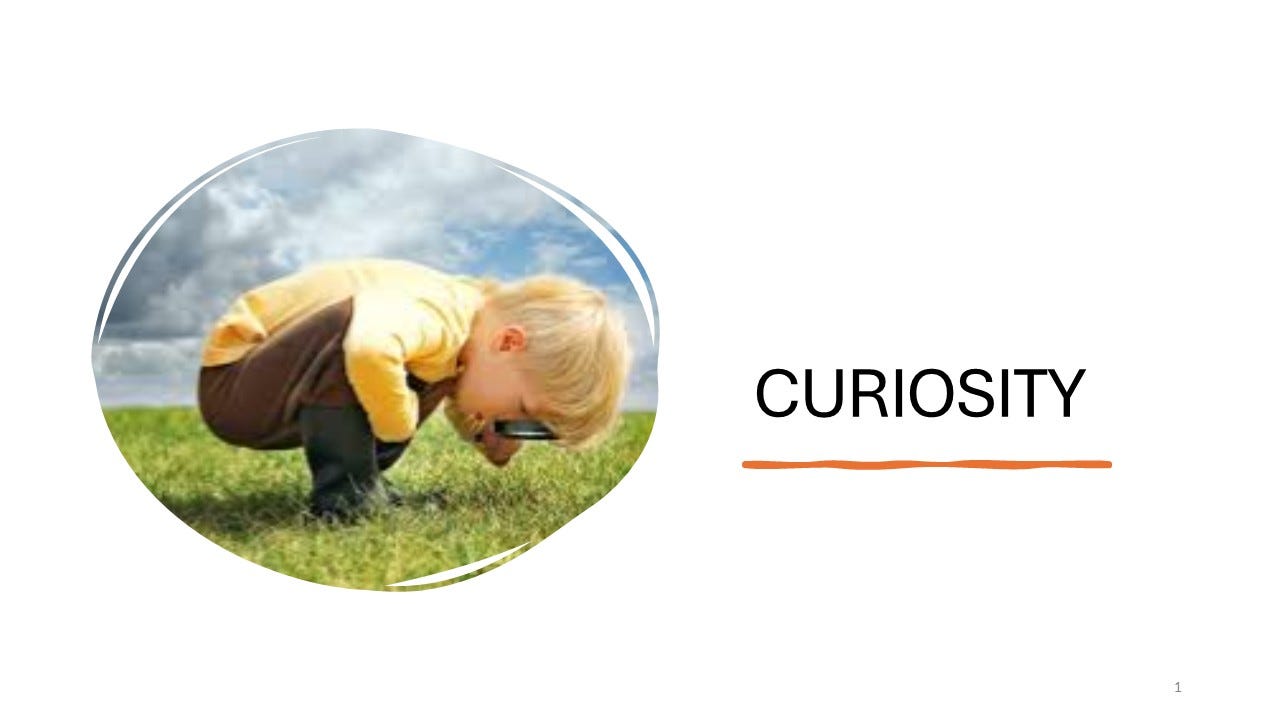
Curiosity is the bedrock of our humanity. Not just foundational to science—but to art and writing and patient care and parenting and plain old survival. Without asking ‘why’ we become reactive, robotic—and potentially extinct. Because if we never explored the plants and berries and nuts scattered about our campsites thousands of years ago, we would not have put them in our mouths to nourish ourselves. Sadly, some of our ancestors ate poisoned berries or rotten meat. That is the risk of curiosity.
I was that annoying child who always pestered my parents asking ‘why?’. I’m still that annoying child, just decades older. This innate questioning is probably why I chase the potential for unintended consequences when policy is adopted, changed, or ended. So, when someone asks me to sign a form, fire an off-site post-doc, obey a mandate, I will ask ‘why?’. I ask because I am curious. I ask because I am already considering the unintended consequences. I ask because it is my natural curiosity and need to poke and prod to discover which directives are beneficial—and which are deadly.
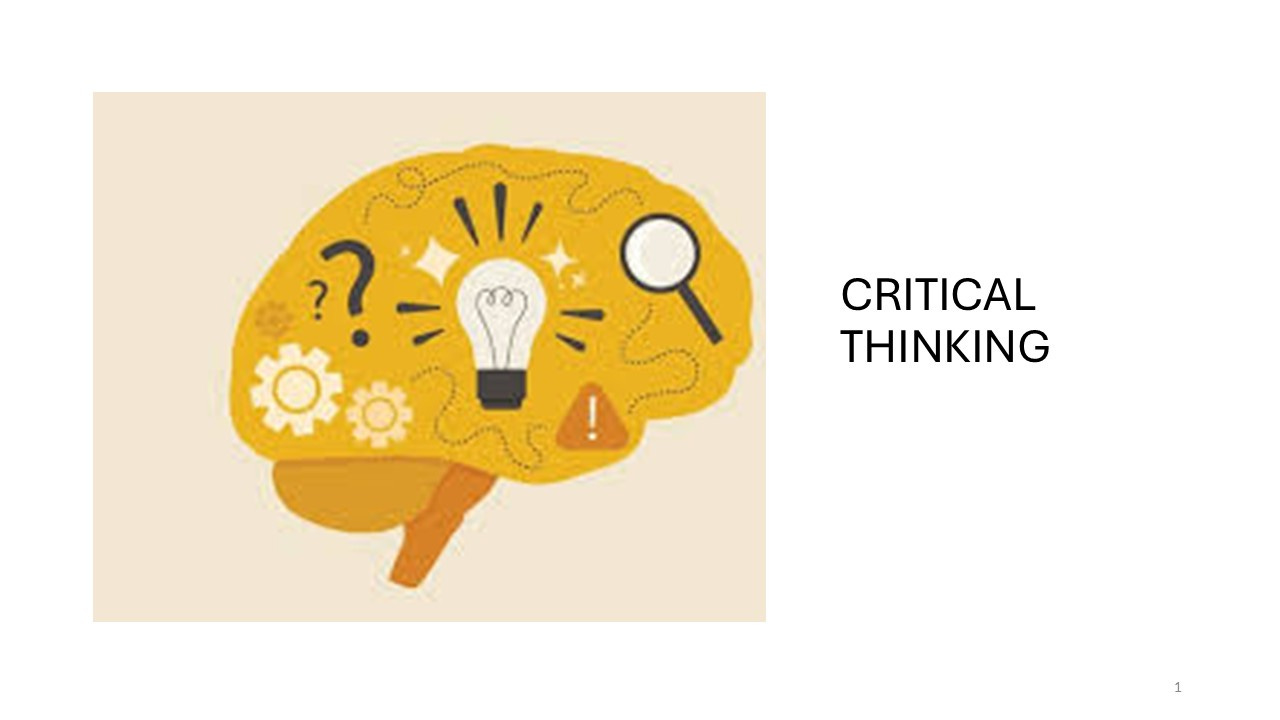
Critical thinking is essentially curiosity implemented. By the way, this is our primary responsibility as researchers—and clinicians: to think critically about the evidence laid before us. As health scholars and providers, it is incumbent on us to discern good work from poorly-conducted work, to ask the best questions, and to discover the best solutions to these questions. This is the most fundamental aspect of our training—to THINK CRITICALLY.
During the pandemic, we heard from many august scientists to ‘trust the science’. We were admonished to not question what is known about the coronavirus and the pandemic itself—or to question treatments and policies that flowed from the pandemic. And while I’m not an immunologist or virologist, I’ve had enough public health and epidemiological training to know that it did not make scientific sense to mass vaccinate during the height of an epidemic. Which led me to ponder all other aspects of pandemic ‘management’.
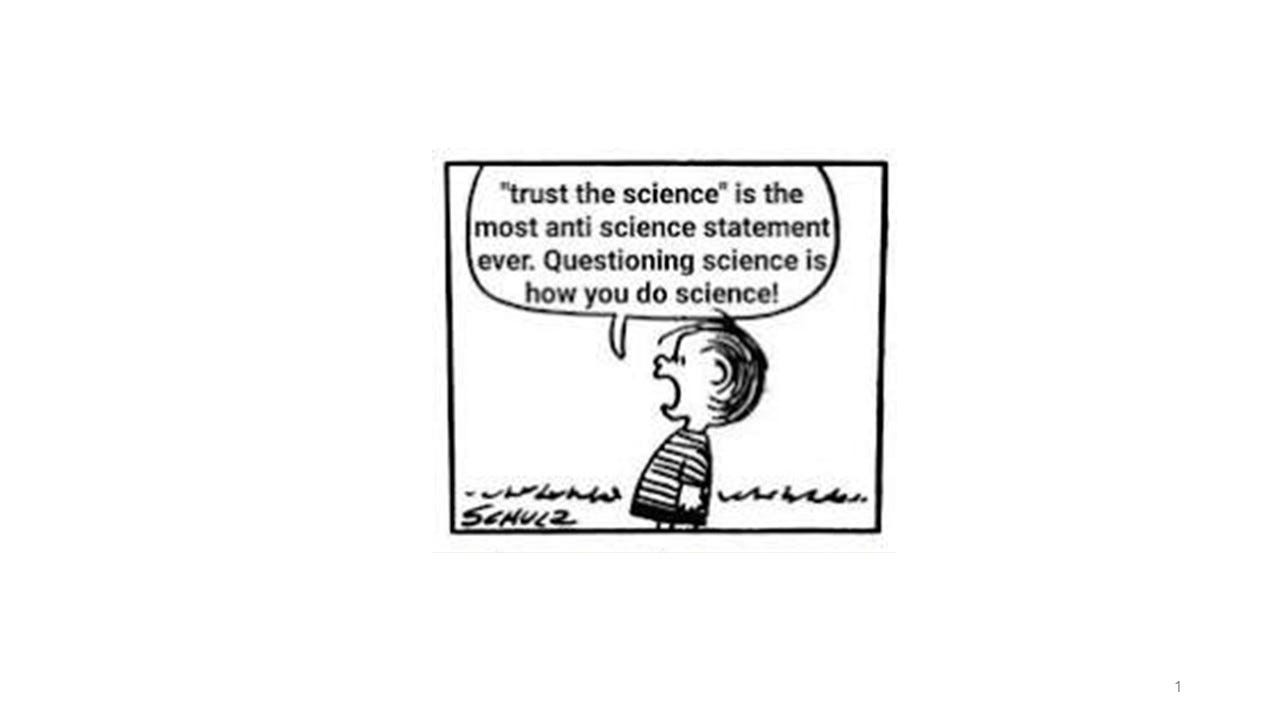
As a researcher, it is your responsibility to ALWAYS question the science. Because science is NEVER settled. Once science is deemed settled, it is no longer science—it is dogma. It is a tool to be used to control perceived truth.
And for those of you who feel you might have dodged the ‘trust the science’ bullet because you don’t ‘do science’—you haven’t evaded a thing, especially if you treat people, because what are clinical guidelines based on? Science. How are pharmaceuticals invented? Science. How are medications made available to providers and patients? Science.
Scientists and implementers are equally responsible for critical assessment of their work.
To be fair, there are times when there might not be enough available evidence to be able to critically parse out a particular question or issue. During the COVID pandemic, we understood we were working with a novel virus and no one really knew how it might affect health, and who it might affect most. We didn’t know how to treat this particular coronavirus. Anyway, this is where critical feeling comes in. That niggling sense that something is not quite right with ‘the science’. You may not know what that ‘not right’ is precisely, but you feel it. In your gut.
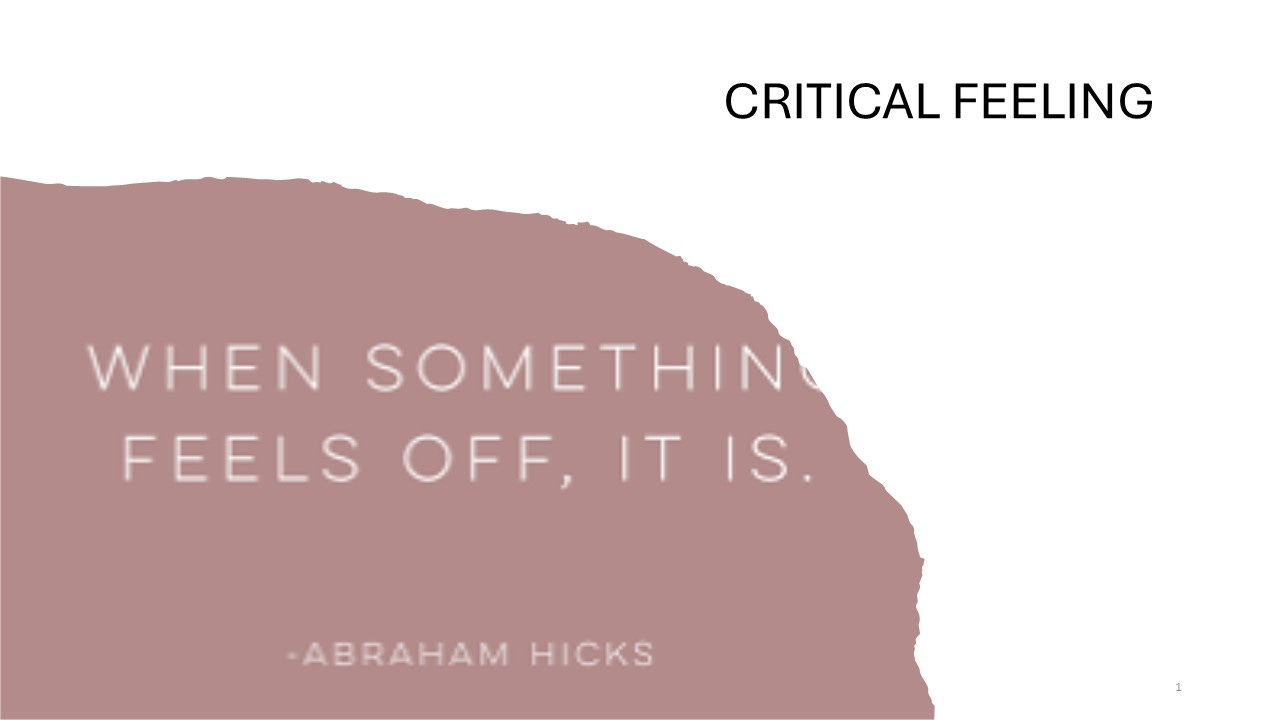
My spidey sense kicked in late 2020. It felt off to me when Krispy Kreme donuts and lotteries for college scholarships became carrots to get the shot. It felt off when social media platforms were inundated with individuals showing off their vaxx cards. The six feet mantra felt off, as did cloth masks deemed as good as N95s. Then the sticks came—the vaccination mandates—felt off. It all felt off to me, even as our leaders reassured me to ‘trust the science’.
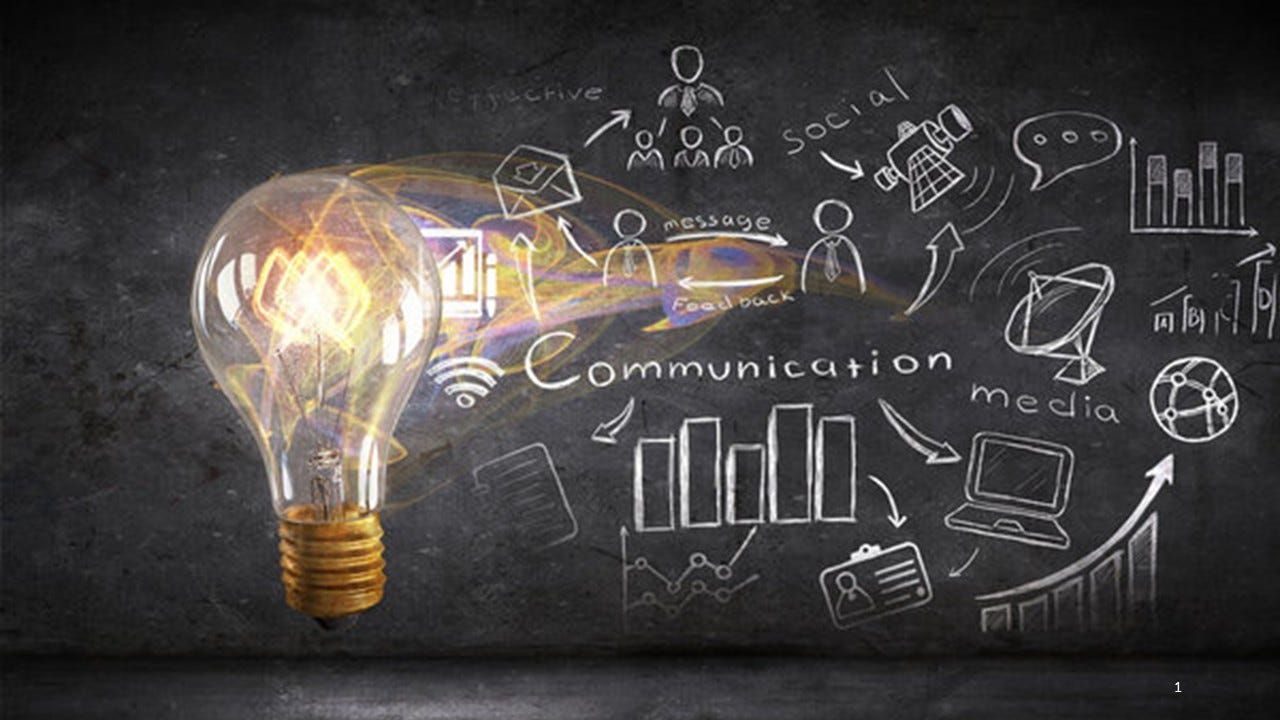
Critical thinking and critical feeling are sensations that happen inside of us. How to express it? Through communication. Communication is a two-way street—you receive information and provide information. When I discuss communication with my students, I discuss the need for clarity, transparency, and truthfulness in the presentation of their work. I also insist on good grammar, proper syntax, and correct spelling.
But as noted earlier, there are times when there is insufficient information to make appropriate decisions: your research question may be novel, there is a paucity of conducted science. Or, the information itself might not be available to you. At the most superficial level, most journals will not publish a negative paper or a paper that fails to demonstrate statistical significance. This is indirect censorship. There is a lot of direct, blatant censorship as well, but that’s a lecture for another day.
Then, there is self-censorship. This occurs when your critical thinking/critical feeling sides are at odds with majority narrative that is being communicated. It’s a weird feeling to be out of step. It’s isolating. It’s lonely. It feels dangerous, like quicksand. I felt these things and more during my pandemic existential crisis. As I questioned ‘the science’. I got quiet. And, at first, I self-censored.
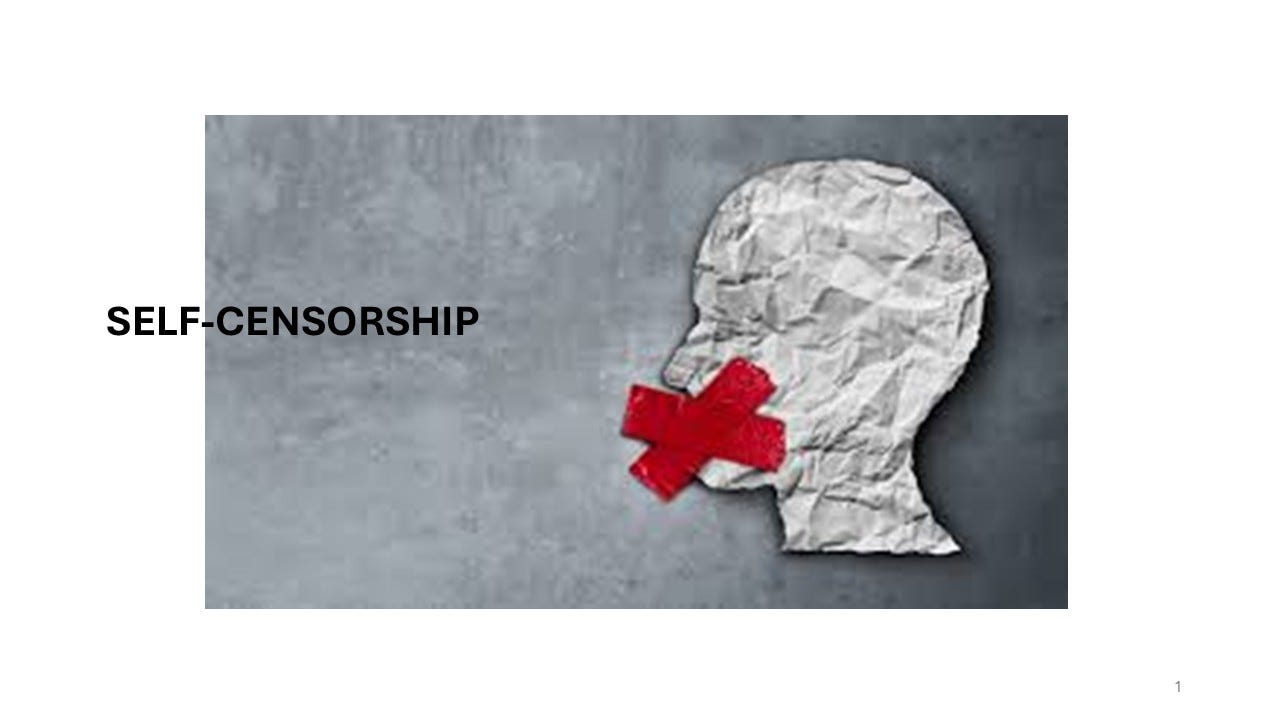
Indeed, this was one of my biggest struggles—deciding whether to stay quiet or not. It was not easy for me to question the mandates at our university, or at the state level, or at the national level. Indeed, I quaked in my little booties. But I did push for medical and religious exemptions to mandated vaccination. I provided testimony at state legislative hearings and on Capitol Hill. I was the signatory author of two citizen petitions to the FDA. These endeavors—and others—pushed me out of my comfort zone.
Two things kept me from self-censoring: first, my strong sense of things not being right which pushed me to protect those I loved, and second, my strong belief in the responsibility of every scientist to abide to the principles of clarity, transparency, and truthfulness in their communications.
I lost a lot of friends because I did not stay quiet. I also lost career opportunities, on campus and nationally, because I voiced my concerns. The clarity I achieved was worth these losses.
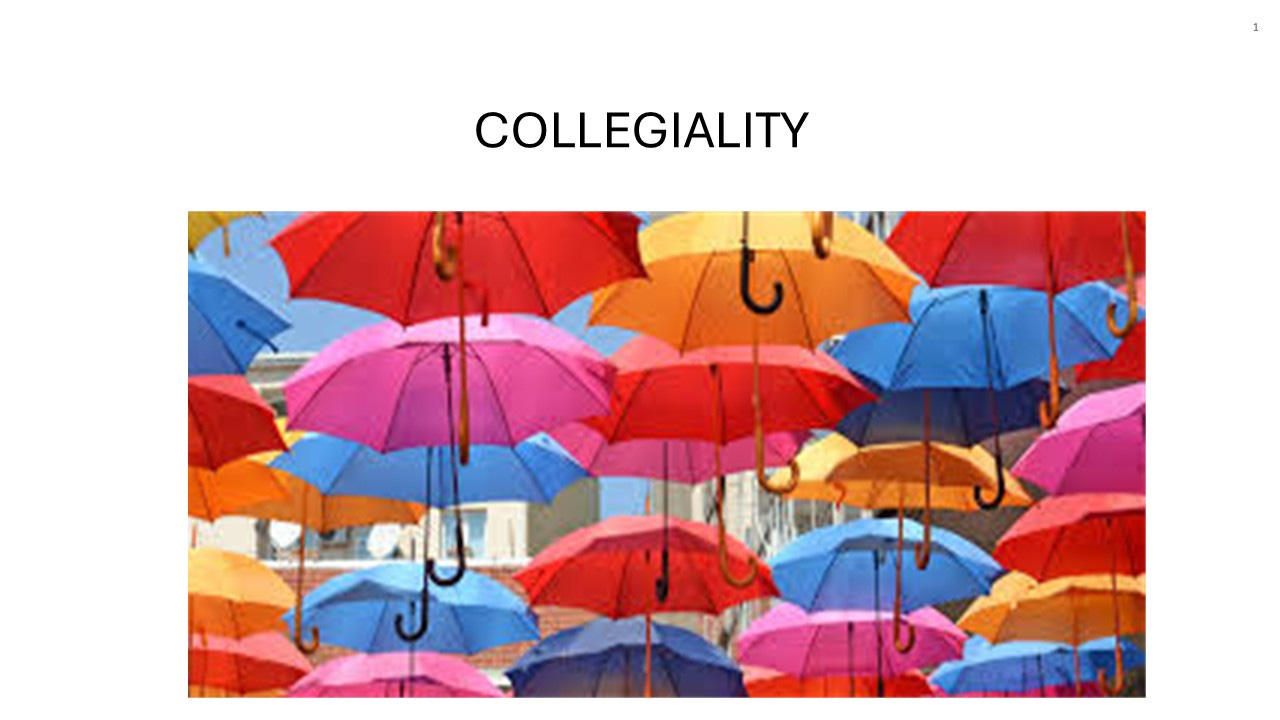
I want to touch briefly on collegiality. In general, academic communication requires at least two people, one who talks and another who receives. Hopefully, the exchange evolves into equal and respectful exchanges of talking and listening.
And you need your colleagues to do your best work! You simply can’t do science by yourself, not these days. It takes a team. It takes diverse skillsets and knowledge and expertise and experience. To truly collaborate requires mutual respect. It requires supporting team members almost unconditionally. One of the hardest things about the pandemic was the way we were carved away from each other. It changed us all. Many of us, like myself, became quieter among colleagues. Others became territorial and self-protective. IMHO, both serve as reasonable responses to isolation.
In order to put academia back on track, I think one of the most important thing scientists—especially the new kids on the block—should put into practice is heart-felt collegiality. Of serving as an umbrella for others, a safe place insuring all will be able to talk and be heard—without consequence. Without feeling the need to self-censor. Our leaders must serve by example and strive to address head-on difficult situations and relationships that occur within our environment, to reward and not punish innovation and expression of controversial thoughts and opinions, and to encourage good citizenship. We all need to return to and reimagine the original role of academic science—to ask the hard questions and respond with the hard solutions.
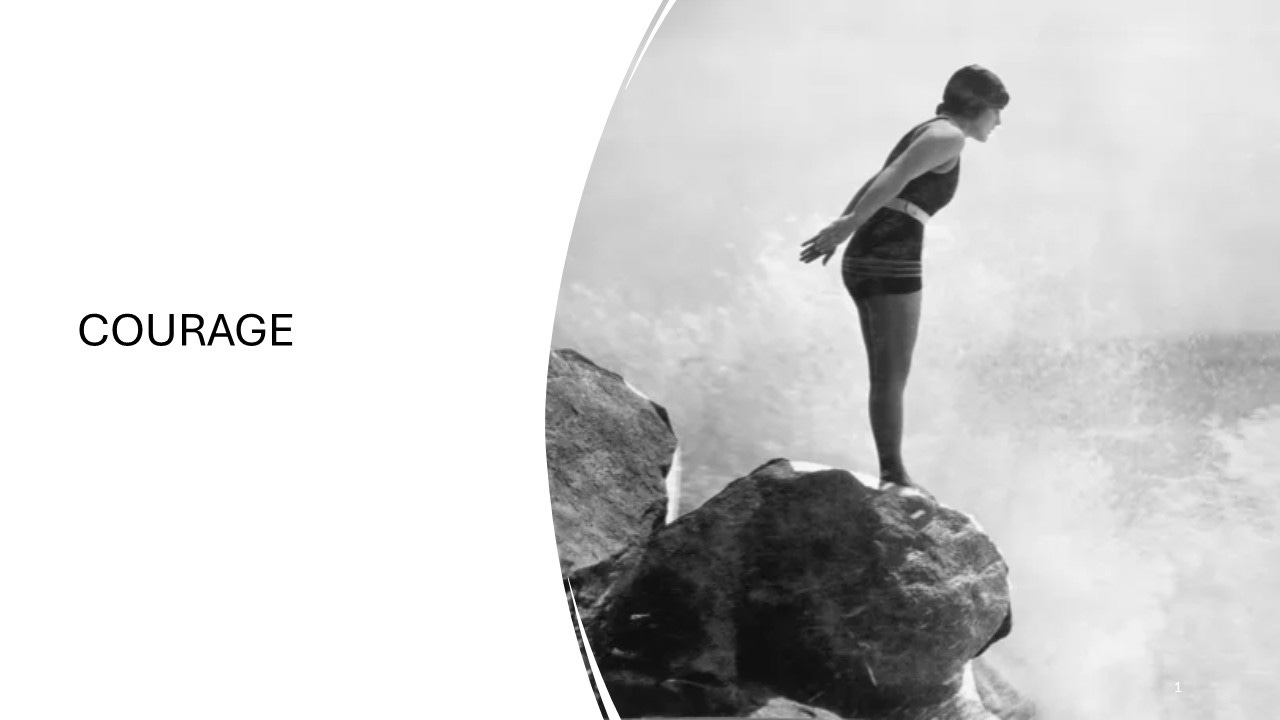
To be a scientist takes courage. These days especially. It takes a leap of faith. It takes courage to embark on a doctoral program. It takes courage to try to adhere to the previous four Cs—curiosity, critical thinking, communication, and collegiality—because increasingly, scientists who do so are not rewarded. Because the common narrative defines whose research is funded. Who is hired. Who is promoted, granted tenure, and who is fired. Critical thinking is under attack—and has been for quite some time. Communicating truthful findings is less valuable than reporting desired findings, in large part because expectations of findings are less pure and objective, and more subjective, usually by whomever bankrolls the project. To stand by colleagues who opine different beliefs takes courage.
So, there you have it. The Five Cs. How do they relate to pie?
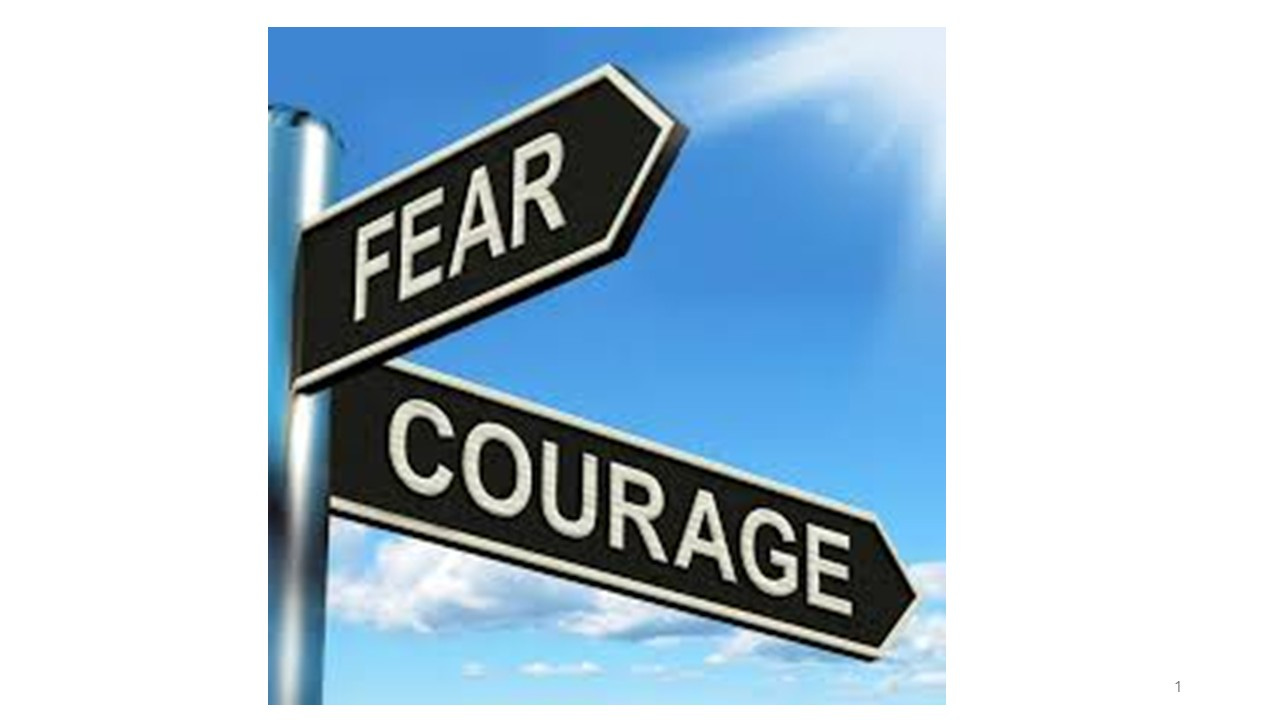
The opposite of courage is fear. Synonyms for fear are multiple, and include hate, poverty, and scarcity. Those of you who know me well have heard me say: one has a choice about everything, and there is only one choice—fear or love.
I have noted my existential crisis, and how dark my work—and my world—felt to me. I also noted I am no longer bitter or sad or resentful of my experiences during the pandemic. And that is because like every good existential crisis, mine did end. I did push through, at first with a little help from gin-and-tonics and, then, with deep spiritual ponderings. The pandemic or, more precisely, the policies enacted around the pandemic, triggered one of the deepest, dankest holes I have found myself in psychologically, emotionally, and spiritually. But I am grateful for that hole. I am grateful for the sense of poverty and fear and, yes, even hate. Because at the end of that darkness there was light, the light of faith and truth and love.
Love. Love also has synonyms, and one of my favorites is abundance. Which brings us back to the pie.
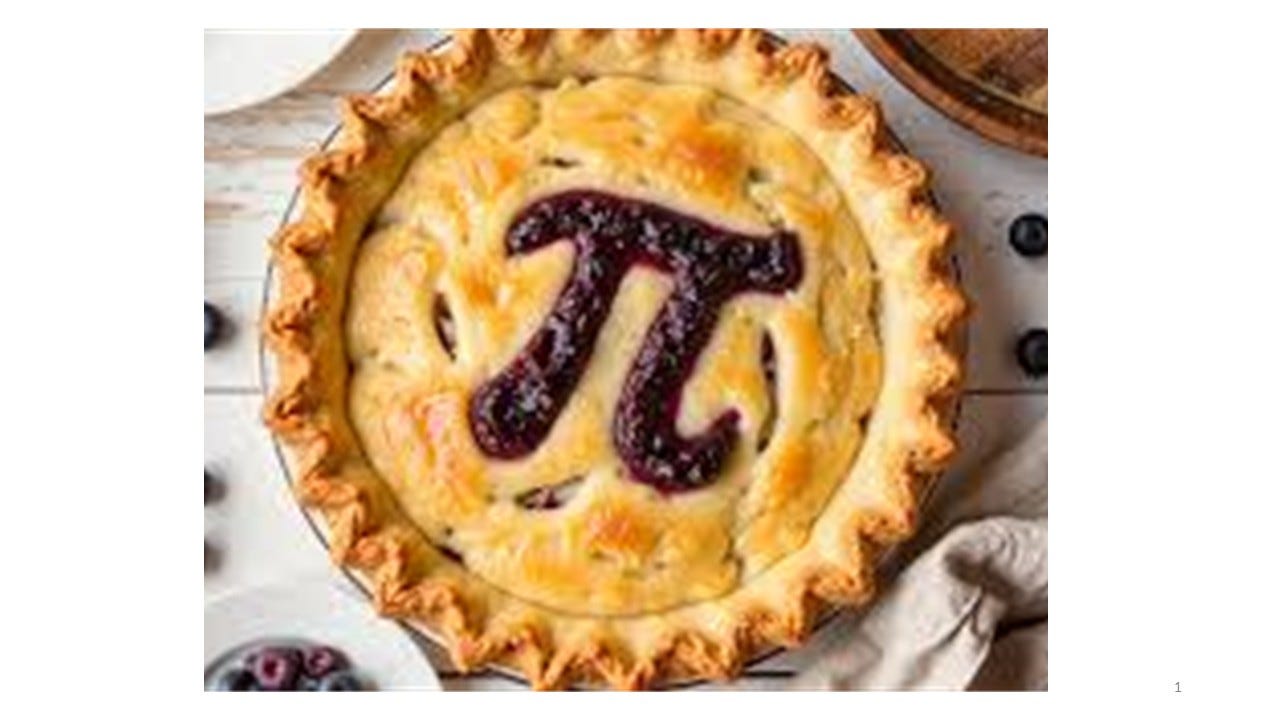
Apple or pumpkin? The whole pie or a sliver? With or without ice cream? The wondrous thing about abundance is one can honor all facets of self. Because abundance, like love, is infinite. It is pi.
And we are all pi. Pi is around us and within us. And we have the choice always to choose abundance over scarcity.
And this is why the scarcity pie is wrong. Because when we push perceptions of limited resources to sow division, to choose one group over another—when we choose scarcity over abundance—we lose our capacity to be curious, to critically think and feel, to communicate truthfully, to be collegial rather than territorial—and we lose our courage.
When I think about my legacy, I think about this: infinite abundance. I think about where I first came to truly believe in infinite abundance—my garden. My land. The trees and the soil and the air and water. Infinite abundance. Infinite beauty. Infinite love. There is no scarcity in nature—it is infinitely regenerative—as there is no scarcity in the heart, the mind, or the soul if we choose to make it so.
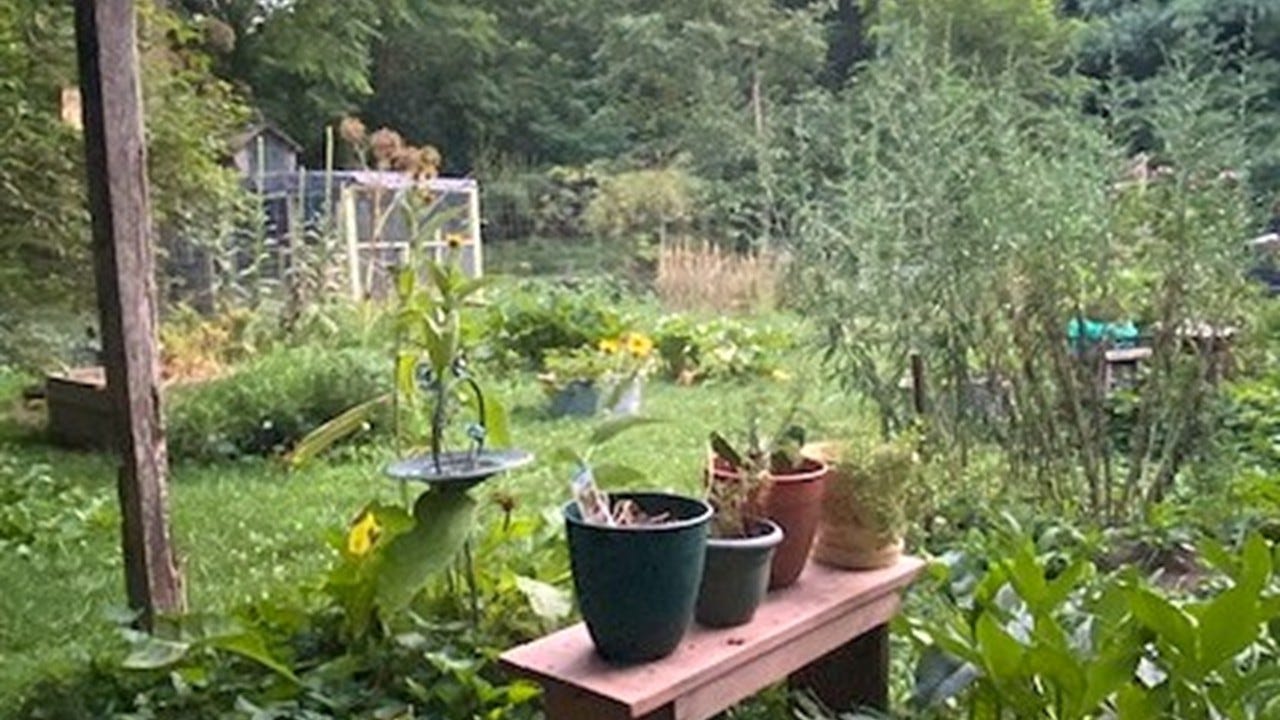
I think about healing, which is what my land has done for me, and what I hope to share with others. Of course, growing herbs and vegetables, tending chickens and supporting rare forest ephemerals forest, is a metaphor for my academic career—growing things. Ideas. Improvements in health. Methods. Lectures. Bodies of knowledge. Students. My children.
Sure, I have left behind a ton of widgets, some of them useful—over 200 papers, multiple grants and contracts that begat other grants and contracts and, best of all, fueled my students’ dissertations and cemented collaborations. Other than this last, intentional year, I’ve had a solid track record of supporting myself and colleagues and my students fully since my arrival at UMB in 2001.
That said, my most satisfying year of scholarship occurred during the past year. It was a time I once would’ve considered lean: a year without dedicated graduate students or post-docs, a year without a grant budget. Indeed, the study which has brought me the greatest satisfaction other than my dissertation was conducted with no external funding other than a $5000 CTSA pilot grant and dregs of my revolving account. This particular project looked at adverse outcomes associated with HPV vaccination. A study that was personal to me. I am grateful for the true collegiality of my co-authors Yu-Hua Fu, Jack Tung, and dear friend and colleague Dr. Danya Qato. The study resulted in peer-reviewed publication and the Patients’ Choice Award at the Dysautonomia International Association’s annual meeting, an opportunity which allowed me to give back to the dysautonomia community which helped me when one of my children developed the syndrome. Finally, the study was considered pivotal evidence in a major lawsuit.
I want to note—there is a tremendous freedom in not having a funding sponsor. I am certain this study would not have launched had I sought funding. Lack of resources meant we worked with great care and urgency. And, in the end, our wee study has made an impact. Which is why I embarked on this career in the first place—to make a difference. Really, isn’t that why all of us are here—to make our world healthier, happier, shinier?
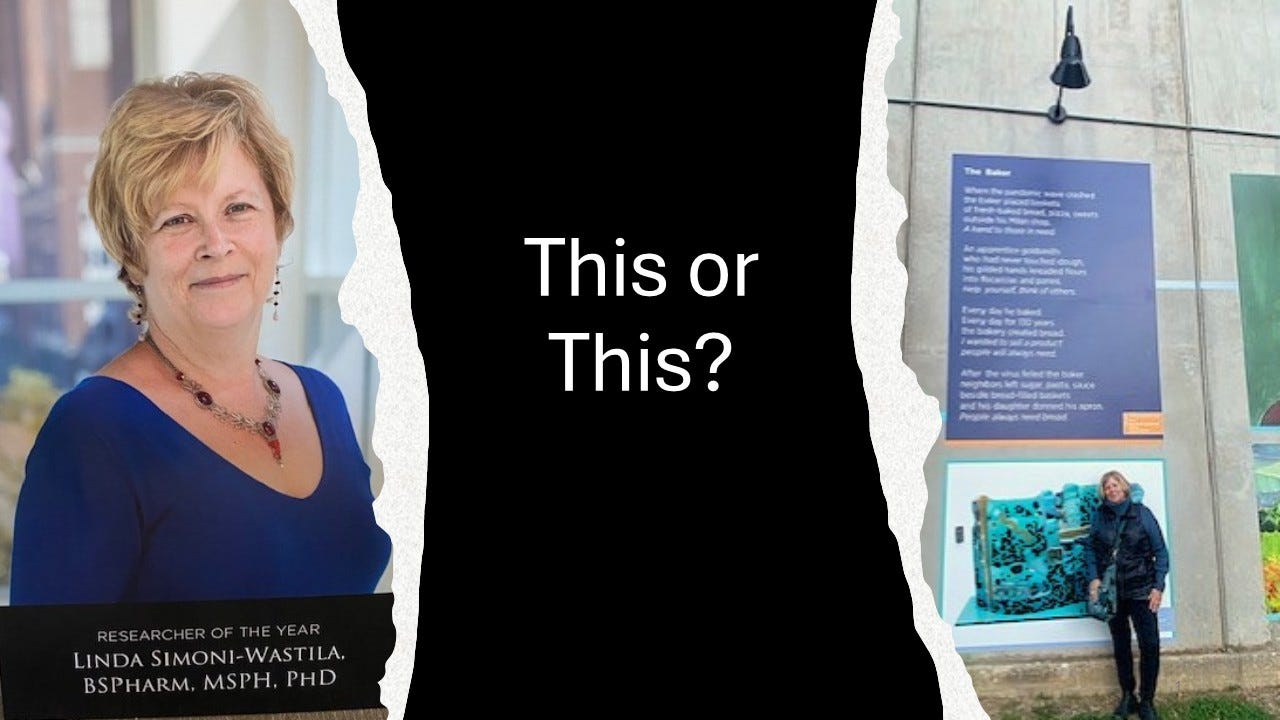
So it comes to this—my pie. This… or this? The scientist… or the writer? Or herbalist? Or small-business owner? What slice shall I take? How big a slice? Adorned or naked? I choose: this AND this. I feel called to tryit all—and more—for the rest of this sweet expanse called life.
In retirement, I will not recline on my sofa watching soaps and stuffing myself silly with bon-bons. I will continue with the science—in my own way—and work with patient-led groups like REACT19, with whom I collaborate on analyzing a survey of vaccine injured. I will continue to work on psychiatric medication harms. Soon, I will be working with the CDC on one of their safety initiatives.
I will make and teach plant medicine at ROOT RISE BE, my newly-launched business, and collaborate with other energy and creative folks to share meditation, art, and self-sufficiency skills. Of course, I will write and teach writing in my studio. All of this uncertainty terrifies me—but the messiness and chaos of uncertainty is so much more interesting than a predictable clean slate.
I feel pleased and blessed as I head away from golden handcuffs into golden years and find greater balance between my scientific, inquiring, curious mind and my creative, colorful, nature-loving mind.
***
THANK YOU
Dean Michel, I remember when we passed each other as you were dropping or picking up your child at daycare. You’ve come a long way, baby. Dr. Jill Morgan, my fifth department chair—thank you for your kindness and suggesting I spend this last year in sabbatical. It has been a godsend. I would like to thank you my other former Dept Chairs—Daniel Mullins, twice, I will always remember our inner harbor walks during the pandemic and ever be grateful for your ear and heart in our talks. And Dr. Ilene Zuckerman, my friend before you were my boss, who brought me to the School. It’s all her fault, and for that, I am grateful.
And my colleagues. So many who have retired—Frank, Ilene, Francoise, Bob, Julie. As of this year, our former department faculty has dwindled in size though not in intellect or productivity. I wish my colleagues continued success in their research and teaching endeavors. There are so many others who have touched me and helped me grow, but I do wish to point out three colleagues who have helped me grow as a scholar and a person—Abree, Peter, and Danya. Each of you have lived the Five Cs and inspired me to follow. Thank you.
Most of all, I thank my many students. My pharmacy students, my post-doctoral fellows, and, of course, my doctoral students. You pushed me, oh yes, did you push me. My buttons—all of them! But you also taught me. You have taught me far more than I taught you. Yes, you taught me negative binomial regressions and machine learning, the nuances of adherence to COPD inhalers and antidepressants, the dangers of polypharmacy and how to pivot tables in Excel. Most of all, you taught me generosity and humility, and yes, the excitement of curiosity. You are the reason I chose to be a professor. From Ashley Slagle, my first graduated student, to Sean Fleming, my last, and all of you in between—Chris, Jane, Patience, Jing-Jing, Keri, Bilal, Aida, Tham, and Abi—thank you. Go forth and eat pie in abundance. Peace…
Thanks for this -- especially for enunciating the "Pie model" of scarcity.
Most of the medical discoveries that actually save lives -- smallpox vaccine, antisepsis protocols, insulin, penicillin, polio vaccine -- were given away to the world for free.